


27th July 2023
Yorkshire & East Midlands Local Group: Field Trip to Bradgate Park- 8 July 2023
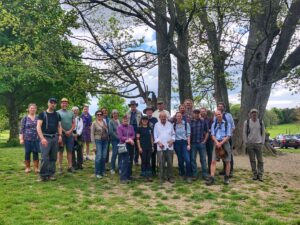
After a long break, the Yorkshire and East Midlands Local Group had an inspiring field meeting at Bradgate Park, Leicestershire. We were welcomed and hosted by Matt and Lisa of the Ranger Team, whose passion and in-depth knowledge of the site made our day full and varied. What made a big difference, was how they had considered well what might be of interest, and how they lead us around the site in an engaging and informative way.

Bradgate Park
Image Credit: Helen Leaf
We looked at so many things – how new areas of woodland were planned, how some trees were retained for habitat value, how in-house timber is used, sustainability, income streams, how and where horse logging is used, coupes, bracken control, propping trees and more. And of course, we spent time with many of the veteran and ancient trees (including the oldest tree on site), some of which were in areas not accessible to the general public. This part of the day was a real treat.

Image credit: Helen Leaf
Despite a fairly drastic weather forecast (heavy rain), we had a good turnout, representing a nice mixture of skills and experience, and including some people for whom this was their first ATF event. All were glad to have come, nobody minded getting wet, and we thoroughly enjoyed our time with the trees. We left with good memories, and with a warm invitation to return, to visit more trees on another part of the site.
Helen Leaf
27th July 2023
Essex ATF Local Group: Field Trip to Weald Country Park- 27 May 2023
We decided to start relatively early so there would be enough car parking, only to discover there was a park run including the exact W3W location we’d chosen for the meet! Not to worry, as is the nature of running, they weren’t there for long, so our group assembled without too much strife.

ATF Essex inaugural event
Image credit: James Chambers
We had a great turn out of over 40 people, mostly arbs (many of whom are friends!) but also quite a few interested non-arbs, just as we’d hoped. It’s our clear aim to invite and encourage everyone who has even the most basic appreciation of and interest in veteran trees to come along and enjoy a walk and talk around looking at a range of wonderful specimens.
It was lovely to finally meet Bob Warnock in person, he has been instrumental in helping us set up a new ATF local group and reach out to so many people to join us.
So, after the group had gathered, we’d introduced ourselves and did a bit of housekeeping (and the runners had disappeared over the horizon) we ventured into the woods and found a lovely old veteran lime tree, surrounded by a recently planted hawthorn ‘security hedge’ around the dripline.
This prompted a quick discussion about how decay and deadwood in trees used to be considered dangerous and or unsightly, with veteran trees actually being removed in the past for reasons which would now be realised as unjustified.
Our walk moved on past some wonderful trees, barely time to look at a lovely old Monterey Pine and a variety of false acacias, indicating some planting had been undertaken here in the past, before we got to a very tall hornbeam just off the main path. When I say very tall, it may actually be the tallest hornbeam in the country! (NB. No actual measurements or comparisons have been made, so if you question this assertion you are invited to visit the tree yourself and work it out!).
We were very glad to be joined by Ecologist Duncan Fisher who provided some fascinating insight into the range of invertebrates that were likely to be present across the park, and the importance of ‘connections’ – sources of water and nectar – which are crucial for environmental factors for a wide variety of invertebrates.

Image Credits: Russell Miller
While we were listening to Duncan, Russell Miller briefly detained a wasp beetle to show the attendees! Later in the day Russell went on to confirm 31 species of beetle at the park!
There were lots of interesting discussions about various wonderful trees as we continued our walk, and before long we reached a huge old oak pollard that had required some very interesting bespoke management a few years back.

Jim Curry describes the steps taken to protect this tree from fire
Image Credit: Matt Searle
This hollow tree had previously had a fire set inside, which a hole in the lower stem had effectively created a ‘chimney’ effect, fanning the flames. Jim Curry related the story of how following that he had climbed into the trunk and used chicken wire to block the lower hole as well as filling the trunk with damp wood chip to prevent further fires. Happily, the tree is still doing remarkably well!

Walking hornbeam
Credit: Matt Searle
A little later we got to the fantastic ‘walking hornbeam’ where Geoff Clack told us the question he likes to ask people seeing the tree for the first time is ‘how many trees are here?’. He then described the process by which this remarkable tree had ‘walked’ across the park, repeatedly failing and then producing a new stem time and again over the years.

’Apatosaurus’ hornheam
Image Credit: James Chambers (July 2021)
One sad item during the walk was to confirm that the wonderful ‘apatosaurus’ hornbeam pictured above had recently succumbed to the forces of gravity and collapsed. It’s still there but in a rearranged state (thanks very much, Isaac Newton!), and will no doubt provide different habitat values over the coming years.

Ganoderma lucidum fungal fruit body, sample, and spore tube count (James Chambers) and spores under a microscope (David Humphries)
Image credit: James Chambers & David Humphries
Russell spotted what we suspected to be a fungal fruit body of the rare species Ganoderma lucidum – on an old hornbeam tree. In order to confirm our identification I took a small sample away. My fellow ATI Verfier, Basil Watkins, kindly advised that G. lucidum usually has about 5 spore tubes per mm, and after I measured that I sent the sample to another friend (and ATI Verifier) David Humphries who confirmed the size and shape of spores were correct with his microscope!
We were pleased to advise the park manager of this rare find.

Image Credit: James Chambers
Our long tree walk continued a little further and we found another old tree which had recently failed. Perhaps the most remarkable consideration about this failure was the fact that the tree had fallen entirely within the protective fencing positioned to deter the public from the danger zone! Isn’t nature amazing?!

Image credit: Bo Chapman
So, the first ATF Essex event was a remarkable success, and with huge thanks to everyone who attended, we are very pleased to announce that the next ATF Essex event will be happening at Thorndon Country Park on Saturday August 12th.
We hope to see you there, please tell anyone who might be interested, all are welcome!
James Chambers
27th July 2023
Cumbria ATF Local Group: Field Trip to National Trust Sizergh Castle and Estate 13 May 2023
With the sun beating down from a cloudless sky, Cumbria’s first ATF event since pre-pandemic took place at National Trust Sizergh Estate in partnership with Cumbria Woodlands, led by Area Ranger Sam Sharples and ATF staple Luke Steer.
This event was a little different to normal, with two walks in one day, giving more people the opportunity to take part. Holding the visits on a Saturday, with morning and afternoon events. ATF visits are generally limited to 40 people, and with over 300 regional members, we felt we could include more people by running two shorter events in one day.
Both walks inspired a number of questions from the groups around Sizergh’s trees, and their management, and ancient and veteran trees in general. A question that came up on both walks and is definitely a favourite of anyone interested in this area, “what defines an ancient or veteran tree?”. Luke handled this question with ease and interest in both cases, explaining far more eloquently than I could, how all ancient trees are veterans but not all veterans are ancient.
Ash dieback was a common theme, coming up upon entering the Flash Bank parkland on both walks as we stopped at a hollow, veteran ash pollard. Knowledge and advice on the topic were shared from Luke Steer and Clare de Villanueva, with Sam talking about how the National Trust are managing their trees. Ultimately, there seemed to be a more positive attitude around the outlook for ash among the groups after this discussion.
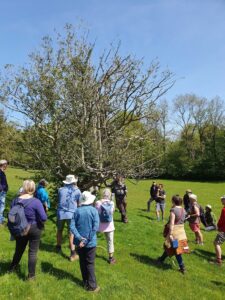
Sam gave us a history of the estate and the management of its trees over time, showing us some magnificent veterans within the parkland, with various management histories. Most memorably, he and Luke then swore us all to secrecy before showing us a 2000-year-old yew nestled in a woodland, and discussed the haloing work that has been happening around it for the last decade.
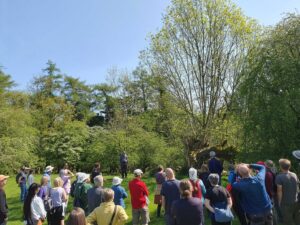
There were plenty of questions, opinions, advice, and discussion around the future management of Sizergh’s veteran parkland trees, including succession, which started some very interesting discussion from Luke and members of the group about Franz Vera’s work, the history of livestock farming in Cumbria, and how we can manage natural regeneration in parkland and wood pasture through grazing regimes.
The agricultural management of the parkland and its trees, and how changes to government subsidies will affect this was an important discussion and Sam explained how they have a new farm tenant, who started just a week before our visit and their tenancy was awarded after talks around how their business plan would work towards the National Trust’s nature and climate targets.
The most common question of the day was “when is the next event?”, so we know there is appetite for more ATF Cumbria activity and have already begun planning more events for 2023 and 2024, and remembering my suncream next time is top of the list.
Graham Watson
24th May 2023
Herefordshire ATF Local Group: Field Trip to Eastnor Deer Park 22nd April 2023
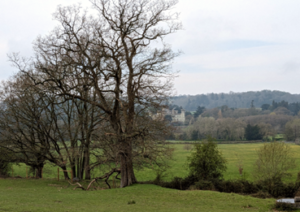
A view across the park towards Eastnor Castle
Image Credit: Jerry Ross 2023
The Herefordshire Branch’s second field trip this year was to Eastnor Deer Park, a tract of land in the south west of the county of about 2km by 2km. The park’s origins probably go back to medieval times, parts having formerly being part of the larger area of parkland associated with Bronsil Castle, 2km east of Eastnor, created c 1460 by Richard Beauchamp but the deer park in its present form was created some time in the late 18th century, while between 1810 and 1824 the then owner, the 2nd Baron (Lord) Somers had Eastnor Castle constructed on land across the road, to the south of the deer park.
Through the 18th century and into the 19th the pre-existing parkland trees had been supplemented by additional planting of individuals and clumps of tree with the intention of creating a ‘landscape park’ as idealised at that time. However, by the 20th century the fortunes of the Somers family had declined and the parkland was left largely to its own devices, until Elizabeth Somers Cock and Benjamin Hervey Bathurst took charge of the estate in 1949 when they began the process of restoring the castle and grounds to their former glory. This process has been continued by their son, James Hervey Bathurst, by whose kind permission we were granted access into that part of the deer park normally closed to the public.
Our guide to the site was Brian Jones, the ATI verifier who has assessed many of the 435 trees listed across the Eastnor Estate (a number that excludes trees within Eastnor Castle Arboretum where others are listed separately). Even within the car park where we gathered there were trees that were not without interest: a couple of mature oaks had recently been felled and within the felled stump of one we found a fungal bracket, identified by Russell Miller as Perenniporia fraxinea. Its common name is the Giant Ash Bracket and, while it is not wholly confined to Fraxinus, it was unusual to find it growing on oak.
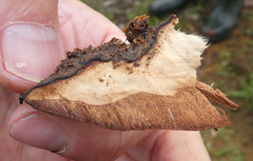
Perenniporia fraxinea showing the characteristically contrasting colours and texture of the flesh and the tubes.
Image Credit: Russell Miller
Russell also pointed out in a felled section of the tree the abandoned galleries of tree ants which, despite no insects being present, he tentatively identified as having been created by Brown Tree ants (Lasius brunneus) or Jet ants (Lasius fuliginosus), both of which are usually found nesting in the rotting wood of trees and stumps.
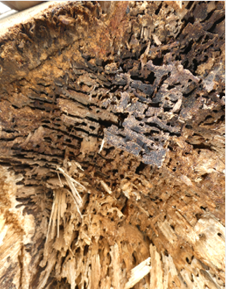
Image Credit: Russell Miller
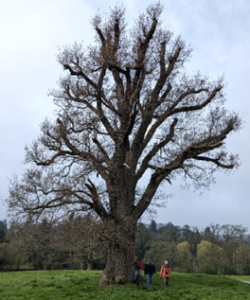
However, within the park itself there was no shortage of interesting specimens, one of the first being a substantial oak tree, recorded by Owen Johnson as ATI no. 42888. When it was recorded in 2015 it had a girth of 6.2m and was described it as having a ‘hollowing trunk and hollowing branches’. The tree is not within the closed deer park and it is quite close to a major footpath, much used by dog-walkers and others. No doubt for this reason the tree had been reduced quite heavily, with nearly all of its main branches having been cut back. This prompted some discussion as to whether this was the most appropriate form of management. The tree evidently retains very good vigour as notwithstanding the severity of its cut-back it produced dense regrowth from around all of the pruning points. In fact, comparing Owen’s photo from October 2015 with one taken in April 2023, albeit from the opposite side, it seems clear that it has been subject to further cut back, no doubt to control what was seen as excessive shoot growth at the branch-ends.
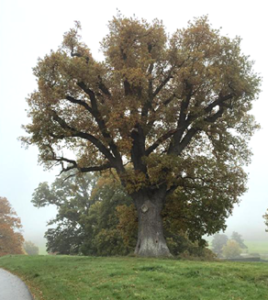
| Tree 4288, in October 2015
Image Credit: Owen Johnson |
Tree 4288 in April 2023
Image Credit: Jerry Ross |
It was suggested that less aggressive crown reduction involving cutting branches back to suitable forks rather than ‘lopping’ them might have resulted in effectively reducing wind loading without stimulating the vigorous regrowth that seems to have resulted in the need to carry out further pruning after just a few years.
At the time of our visit there were only relatively few visitors, but Eastnor hosts numerous events throughout the summer months that help to finance the upkeep of the estate. Thus, the deer park is used for music and other festivals with significant areas used for camping and for caravans. Within these areas, tree safety must therefore be a high priority, a fact that no doubt explains some of what appeared as the rather drastic pruning that had been carried out on a number of trees. However, within the deer park proper, public access is restricted and risk levels (i.e. the probability that a tree failure might result in harm to person or property) are much reduced.
It was encouraging to see that some large debris from fallen or felled trees and from pruning events had been left to provide habitat for saproxylic organisms including one large collapsed oak that to expose cubical rot, probably caused by Laetiporus sulphureus (Sulphur Polypore).
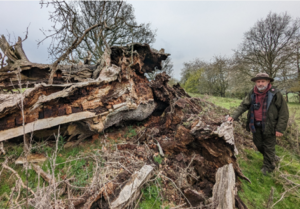
Image Credit: Jerry Ross
This provided rich pickings, including the galleries of the Lesser Stag beetle (Dorcus parallelipipedus). Elsewhere Russell’s knowledge of entomology helped to confirm the biodiversity value of these old trees by identifying the Hawthorn Jewel Beetle (Agrilus sinuatus) as well as the exit holes of Death Watch beetle (Xestobium rufovillosum) and Fan-Bearing Wood Borer (Ptilinus pectinicornis).
Further on we came across a tree one half of whose trunk was dead and had clearly been so for some time. It was conjectured that this may have been the result of lightning, but it was the curiously hairy larva of Ctesias serra that was of particular interest. This is the Cobweb Beetle, so called because its larvae make a living by stealing the remains of dead insects from spider webs. This is a risky procedure and to prevent themselves from becoming food for the spiders whose larders they raid, when threatened the larva erects and vibrates the long bristles that covers its body, the spiders being unable to get their fangs through all those hairs! They are one of the species dependent on old and veteran trees, typically living under the loose bark of old and veteran trees. This one was hiding amongst the crevices of the exposed dry timber but despite being no more than a few millimetres long, it was spotted and photographed by Russell.
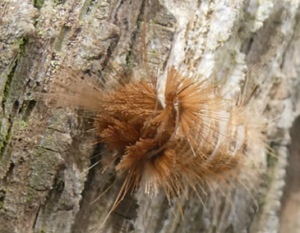

The cobweb beetle larva, and the queue to observe it!
Image Credit: Russell Miller
After retiring back to the car park, where the conveniently located Woodshed Café was available to provide drinks, snacks and cakes, a longish walk away from the deer park to another part of the estate took us to a particularly fine ancient oak, well over 8 metres in girth: a good climax to a good day!
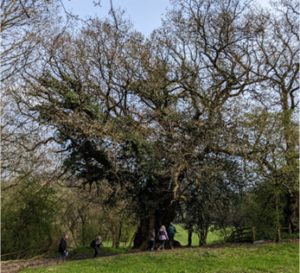
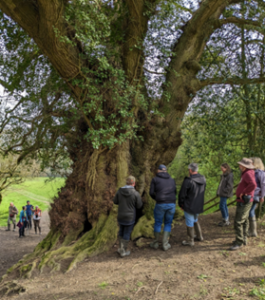
Pedunculate Oak, ATI no. 42884
Image Credit: Jerry Ross
Our thanks go to Mr Hervey-Bathurst for facilitating our visit and also to Graeme Ker, the Resident Agent for the estate, for his assistance.
Jerry Ross
Herefordshire ATF
1st November 2022
ATF Field trip to County Hall and the Kenn Church Yew
ATF Field trip to County Hall and the Kenn Church Yew.
The weather was kind, and we had good attendance on the day. We looked at a range of Veteran Quercus x hispanica ‘Lucombeana’ or Lucombe Oaks as many phenotypes and a few different varieties exist today at County Hall. The recent history of this Quercus species was shared with the group, and we saw a few other gems. Including a Beautiful Fagus sylvatica ‘pendula’ or weeping Beech, a Pseudolarix amabilis or Golden larch, a Quercus canariensis or Algerian Oak and a Tetradium or Bee Bee tree and a Genista aetnensis or Mount Etna tree broom.
The neighbouring property, the Veitch families Otago house sits next door and some of their original trees still exist from the nursery and family home. According to Henry Girling the Lucombe, Pince and companies’ original nursery was at County Hall, plus a second site a mile away that later became Pince’s gardens. This explains the non-grafted original Lucombe at the County Hall site. Aran Kimberly kindly carried out a picus on one of the Lucombe’s and shared his findings and we are very grateful to you for the effort in making the day so insightful and special.
The Magic Tree references the Lucombe’s being a cross of Quercus cerris, Turkey Oak and Quercus Suber, Cork Oak and described as “some of the original reached about 35 ft (10m) in 11 years with straight trunks and corrugated bark. This is Lucombe’s Oak. It grows to about 100ft (30m) with spreading branches upswept at the ends and thick saddle like bases. The leaves last well into spring, unless the weather is very severe. The timber is fine and close-grained, pale yellowish-brown and might be a valuable fast-growing hardwood, were it not for its uneconomic propagation.”
The magic tree goes on to state “Seedlings grown from the original clone by William Lucombe’s son in 1792 showed considerable variations in vigour, evergreeness and shape and in the corkiness of the bark. The resulting trees have been often distributed erroneously, under the name Lucombe Oak.”
“The following are seedlings of the Lucombe Oak, raised at Lucombe’s Exeter nursery”
“Crispa called the ‘new Lucombe Oak’ was raised in 1792 by the younger William Lucombe. The bark is corky and the dark green leaves are whitish underneath, with rather crispy edges”
“Dentata raised in 1830 by Lucombe, Pince and company has a corkier bark than its parent. It has large evergreen leaves”
“Heterophylla has leaves of different shapes, the middle of some is reduced to a strip ¼ inch (6mm) wide. It was raised about 1830 by Lucombe, Pince and Co.”
“Suberosa raised in 1792 has 2 inch (5cm) thick corky bark, and small leaves. The original tree, at the entrance to St Thomas nursery was cut down in 1903. The tree by the Chapel at Killerton is probably Suberosa”
References taken from: The Magic Tree- Devon Garden Plants: History and Conservation. National Council for the Conservation of Plants and Gardens (Devon Group) 1989. Devon Books, Exeter.
Larkbeare house was added on the day, a wedding venue for DCC. Home to a large Ancient, Castanea sativa or sweet Chestnut, a massive veteran Sequoiadendron giganteum and a beautiful veteran Tilia x europaea or common Lime and a young Quercus x turnerii or Turner Oak.
The day concluded at Kenn Church at the venerable Ancient Taxus baccata or Yew. This Breathtakingly, Beautiful tree is thought to be in the region of 2000 years old and it was agreed by the group to be at least 1500 years old and measured on the day, just shy of 11 metres circumference. A second Yew of this size class and status exists just 4 miles away at Mamhead church. Something for another day!!! Thank you to all who attended and especially Chris Knapman for his vast and valuable knowledge which he openly shares with all and for supplying the amazing photos, a masterclass talk on the incredible giant puffball, Calvatia gigantea with a delicious example shown on the day.
We had some great debates and few laughs along the way. Thank you so much to the core Devon ATF group, our Chair Mat Shute and to all the members who support the events and for making our day and group such a success.
Bob Stevenson Devon Tree Officer
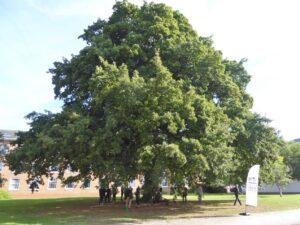
Quercus x hispanica ‘Lucombeana’ Chris Knapman
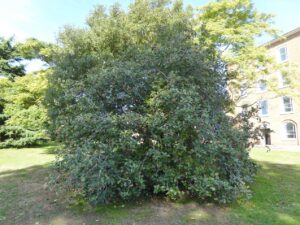
Sorbus devoniensis, Chris Knapman
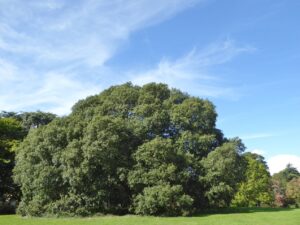
Quercus x hispanica ‘Lucombeana’ Chris Knapman
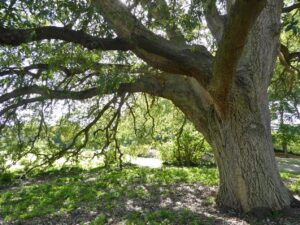
Quercus x hispanica ‘Lucombeana’ Chris Knapman
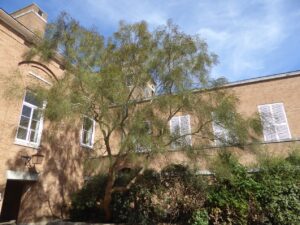
Genista aetnensis Mount Etna Broom Chris Knapman
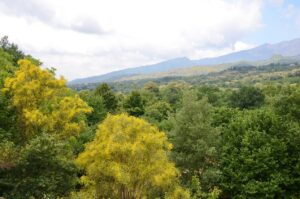
Genista aetnensis Mount Etna Broom Chris Knapman Mount Etna Broom in flower Sicily, Italy.
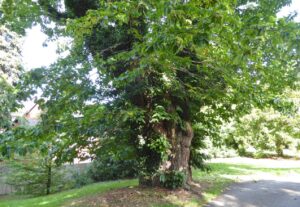
Castanea sativa Chris Knapman
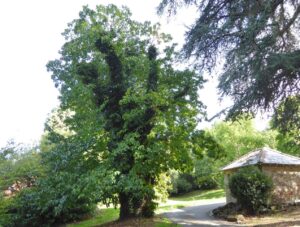
Castanea sativa Chris Knapman
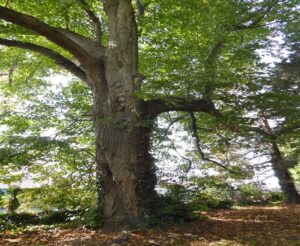
Tilia x europaea Chris Knapman
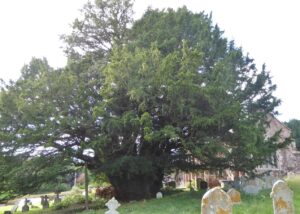
Taxus baccata Chris Knapman
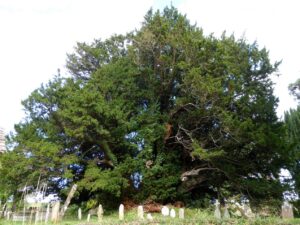
Taxus baccata Chris Knapman
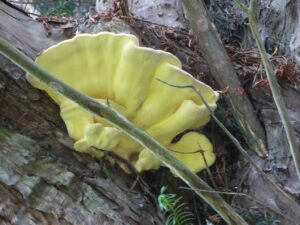
Laetiporus sulphureus on Taxus baccata Chris Knapman
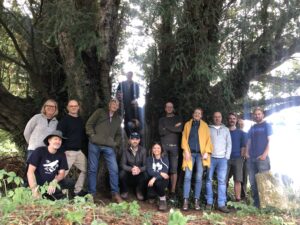
ATF Devon Group
14th July 2022
Nettlecombe- ATF Devon Field Visit
ATF Devon visit to Nettlecombe
On Saturday 11th June the Devon branch of the ATF were hosted by the Field Studies Council at the Leonard Wills Field Centre at Nettlecombe. This is actually just over the border into West Somerset but those who made the journey were incredibly glad they did as we had a day of spectacular trees and glorious weather in a stunning setting. The grounds of the estate are made up of heritage parkland, ancient woodland containing many veteran oak trees as well as a Site of Special Scientific Interest because of its lichen communities. The veteran tree community was mostly comprised of oak but with a scattering of beech, sweet chestnut, sycamore and some planted exotics used in the landscaping, the estate has planted a small arboretum with some very interesting specimens now of a good age and size, but sadly we ran out of time and didn’t get to explore this area.
The day started with an introduction by Anelma Roberts, Senior Tutor for the FSC who gave us a brief history of the estate, of particular interest was the longstanding deer park which dates back centuries having possibly been created when the original oak woodland that dominated was heavily felled to contribute timber to the fleet that defeated the Armada in 1588.
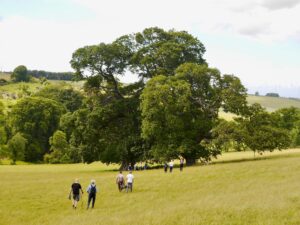 (credit Julian Hight)
We were fortunate to have a selection of knowledge participants in the group and enjoyed wide ranging conversation, we were very happy to welcome Chris Knapman, former Chair of the Devon ATF, join us for the day to share his wisdom. Also thanks to author Julian Hight who bought his camera and had the presence of mind to take some photos which is more than I managed in the presence of these remarkable trees.
From among the wealth of trees we found on the day the more notable ones included:
- a huge surprisingly healthy oak that could potentially be a cluster of separate trees that have fused into a single goliath tree,
- an oak that had long ago lost most of its trunk and now had a single branch which served to cantilever the whole tree keeping it upright for hopefully many more years
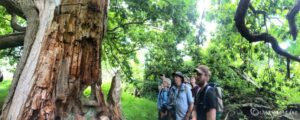 (credit Cheryl Duerden)
- a cedar that was obviously introduced as part of the landscaping of previous generations but now a veteran, this sparked a conversation about how we value non-native trees in a changing climate
- The same cedar had several rowan saplings piggy-backing on the tree and growing in the decay pockets on the stem – the conversation grew quite animated about whether they should be removed in order to protect the cedar
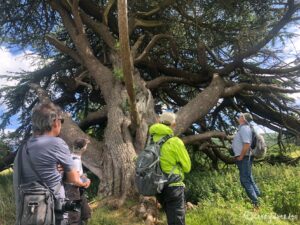 (credit Cheryl Deurden)
- an insignificant looking hawthorn that was probably one of the oldest trees we saw on the day!
The discussions covered the protection from over-grazing that the trees were receiving having been fenced off from the sheep that helped maintain the wildflower meadows and we were really pleased to see that the staff were not unnecessarily tidy and felt able to leave fallen deadwood to decay in the shade of the trees. We also saw from a distance the new trees that the estate staff have planted to create a future generation of open grown field trees that will hopefully one day become veterans and continue the amazing legacy of this valley.
We also found plenty of the nettles for which the combe was named.
Many thanks to everyone who attended and ATF Devon for organising this visit.
Images supplied by kind permission of Julian Hight or Cheryl Duerden
31st May 2022
Saltram House- ATF Devon Field Visit
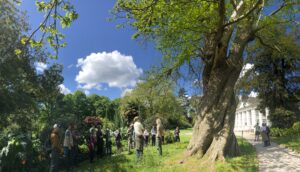
On the 7th of May 2022, as part of the ATF Devon Group, we organised the first field visit since the pandemic, to National Trust’s Saltram House in Plympton.
The visit was guided by Saltram’s head gardener Martin Stott, as he showed us around the immediate vicinity of the iconic mansion, overlooking the River Plym and set in a rolling landscape park. There was huge relief from all the attendees with finally having in-person events take place.
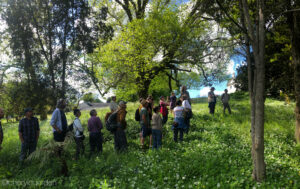
We were taken around the mostly 19th century garden and shown some beautiful veteran trees, including a large bundle-planted lime, a veteran storm-damaged oak (Quercus petraea) that still had vigorous growth, a stunning sweet chestnut (Castanea sativa) that Martin and his team have been reluctant to remove even though it was directly over a footpath (thus being carefully managed), as well as an impressive Monterey pine (Pinus radiata). We were also very lucky to have had ATF founder president Ted Green MBE join us for the walk around, as he shared with us his profound knowledge of ancient and veteran trees and told us stories of his adventures. Jill Butler and Caroline Davis MBE were ready as ever too with their knowledgeable anecdotes and tackling questions from curious attendees.
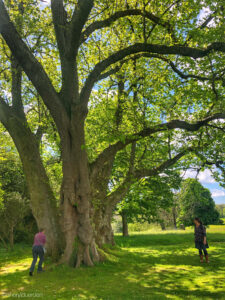
It was an unusual visit with veteran and ancient trees within a well-established garden setting; this also gave us an opportunity to look at some exotic tree species.
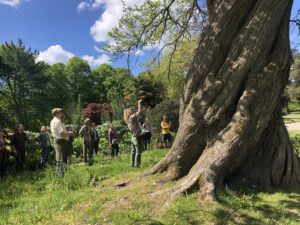
Martin was very engaging in his open and frank discussions with us. He was also refreshingly receptive to different perspectives on how trees could be managed and preserved. We had an interesting discussion about a Holm oak avenue and how to marry historic landscape design processes with evolving conservation values. The future security of tree resources was also one of the topics discussed, leaving some food for thought.
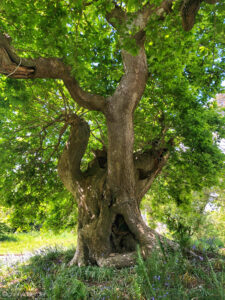
Even though we’ve barely scratched the surface due to time constraints, everyone who participated had a great time and are looking forward to visiting Saltram again in the near future to have a better look at its historic parkland.
Many thanks to everyone who attended and the Devon core group for organising this visit.
– Cheryl Duerden
(ATF Devon group)
14th April 2022
The ATF Policy and Consultation Group responds to the Biodiversity Net Gain (BNG ) consultation
ATF’s Policy and Consultation Group responded to the consultation: Consultation on Biodiversity Net Gain regulations and implementation
You can read the ATF’s Policy and Consultation Groups response BNG Consultation ATF FINAL Q and notes
10th February 2022
The Ancient Trees on Offa’s Dyke, a blog by Andy Gordon
The Ancient Trees on Offa’s Dyke
It is widely accepted that Offa’s Dyke was built during the reign of King Offa of Mercia (757-796). The dyke roughly followed the current English Welsh border but was not continuous, running in three sections for 81 miles (of the 150 miles) from the Bristol Channel to the Irish Sea. It had a ditch on the Welsh side, with the displaced soil piled into a bank on the Mercian side. No trees would have been planted on the dyke itself at the time of construction, and there are no records of trees having been planted at any time. Over the last 23 years, the position of 441 trees, 38 different species, have been recorded on the Ancient Tree Inventory (ATI).
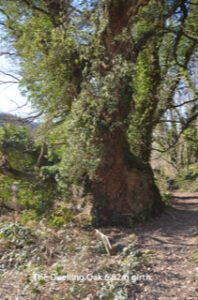
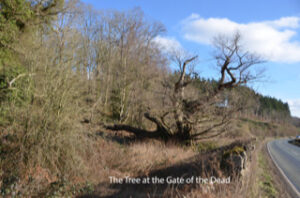
The oldest tree, and one of the earliest trees added to the ATI is the Pedunculate oak known as The Tree at the Gate of the Dead, on the southern edge of the Chirk Castle Estate. Until 2012 when it split in two, it measured 9.53m in girth, suggesting an age of about 1000 years. Records show that the “Dead” in the name refers to the soldiers of King Henry II who were ambushed here by Prince Owain Gwynedd.
By tracing the route of the dyke itself, not the Offa’s Dyke path which deviates significantly at times, it has been possible to identify a total of 441 ATI recorded trees, either on the dyke or within 5m of its track. Not surprisingly 211 trees (48%) are oaks. With 135 named as “oak”, 51 identified are pedunculate, and 15 as sessile. Another 35 oaks along the dyke have girths in excess of 5m, suggesting ages of over 300 years.
Beech is the next most numerous species (10%), with two trees with girths over 8.5m in the woods to the east of the Wye near Whitebrook. Ash (8%) is also abundant, with the largest a massive multi-stem tree measing 8.4m in girth at 50cm.
There are 25 yews (6%) recorded in the ATI, the largest and possibly the oldest, has a girth of 4.32m, probably around 700 years old. Although a maiden, it has significant fluting which makes ageing it difficult.
Limes (also 6%) are only once specified. Five percent of the trees are Scots Pine. Species appearing less than 5%, are Hawthorn (3%), unspecified birch (3%), field maple (2%), hazel coppice (2%) with some having been left uncut for many years, rowan (2%), and cherry (2%). Sycamore (1%), apple (1%), other conifers (1%), willow (1%), elder (1%), holly (1%) and sweet chestnut (1%), and individual trees of hornbeam, English elm, horse chestnut and alder are also present.
These records, as with other ATI entries, maybe influenced by a recorder’s interest, location, and site accessibility[1]. As a result, many ancient and veteran trees in the UK have not yet been recorded; could still be waiting to be found on Offa’s Dyke!
Andy Gordon
[1] Nolan, Victoria; Reader, Tom; Gilbert, Francis; Atkinson, Nick. 2020 The Ancient Tree Inventory: a summary of the results of a 15 year citizen science project recording ancient, veteran and notable trees across the UK. file:///C:/Users/JanieBurrage/Downloads/The_Ancient_Tree_Inventory_a_summary_of_the_result.pdf [Accessed 08.02.22].
2nd November 2021
The ATF Policy and Consultation Group responds to the Local Nature Recovery Strategies: how to prepare and what to include
Jill Butler and Caroline Davies have responded to the DEFRA consultation: Local Nature Recovery Strategies
You can read the ATF’s Policy and Consultation Groups response here
